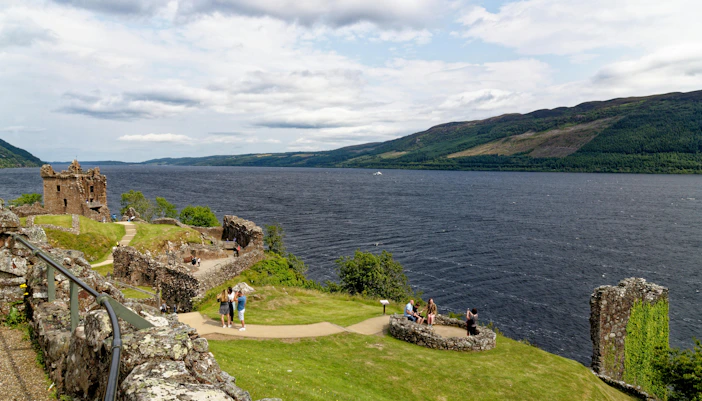
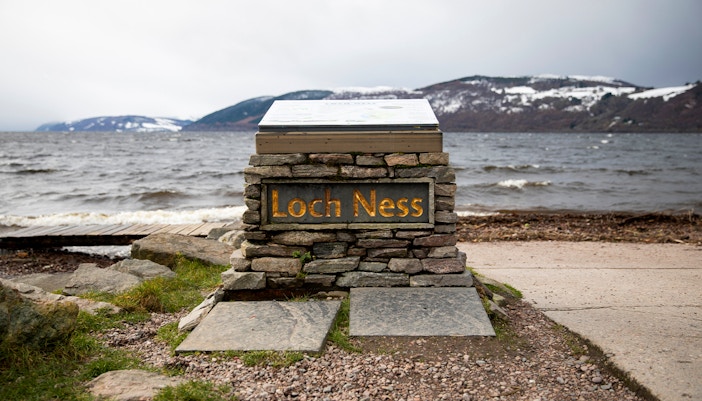
- Location: Perched on the western shore of Loch Ness, around 2 miles (3km) east of Drumnadrochit and about 15 miles (24km) southwest of Inverness.
- Origins: The site has been occupied since the early mediaeval period, while the stone castle seen today was largely built from the 13th century onwards.
- Historical significance: Once one of Scotland's largest mediaeval castles, Urquhart Castle played a strategic role during the Wars of Scottish Independence and later conflicts in the Highlands.
- Must-see highlights: Climb the Grant Tower for panoramic views over Loch Ness, explore the ruins of the Great Hall and gatehouse, and visit the Gaelic Bard's Prison, a small prison cell traditionally linked to the bard Domhnall Donn.
- Unique fact: The castle was deliberately destroyed by government forces in 1692 to prevent it from being reoccupied following the Jacobite rising. Today, its dramatic ruins overlooking Loch Ness make it one of Scotland's most photographed castles.
- Managed by: Historic Environment Scotland.
The legend and history of Urquhart Castle
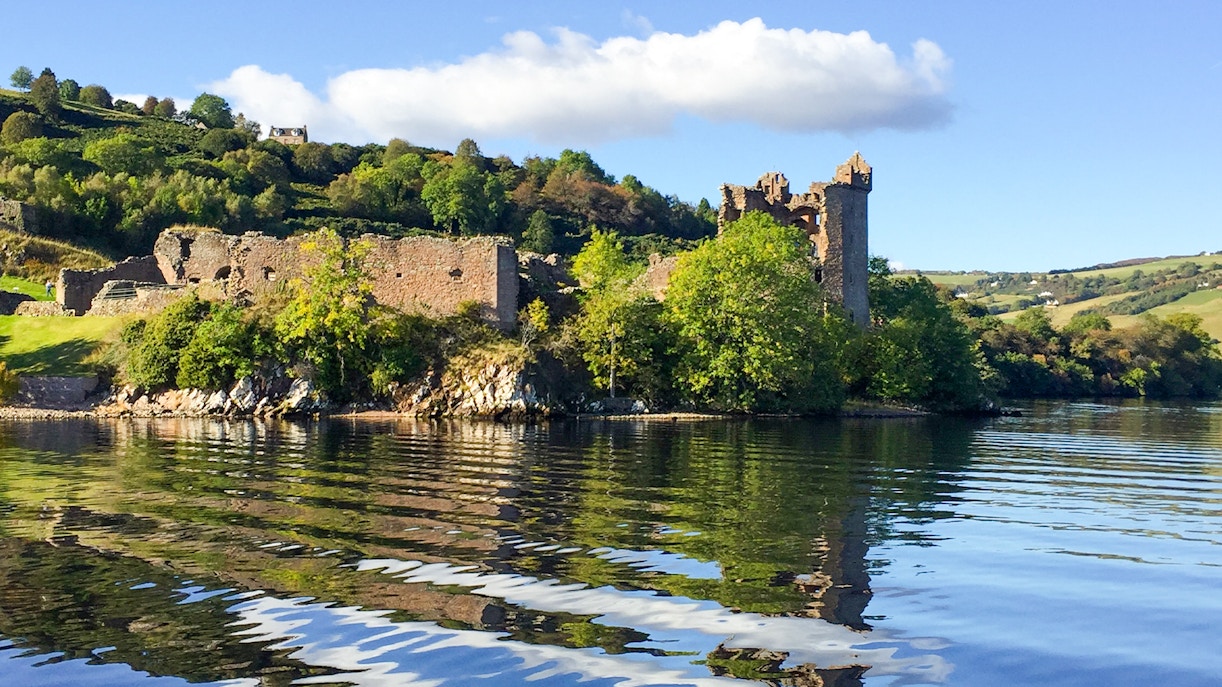
Perched on a rocky headland overlooking Loch Ness, Urquhart Castle is one of Scotland's most iconic mediaeval fortresses. Its history stretches back nearly 1,000 years, with the site playing a key role during the Wars of Scottish Independence and later clan conflicts in the Highlands. After being deliberately blown up in 1692 to prevent its use by Jacobite forces, the castle fell into ruin. Today, its dramatic remains and sweeping views across Loch Ness make it one of the Highlands' most visited historic attractions.
Urquhart Castle in a nutshell
Things to know before booking Urquhart Castle tickets
- Book in advance: Due to the popularity of Urquhart Castle, it is highly recommended to book your tickets 2 weeks in advance, especially during the peak summer months, to avoid long queues and ensure your spot.
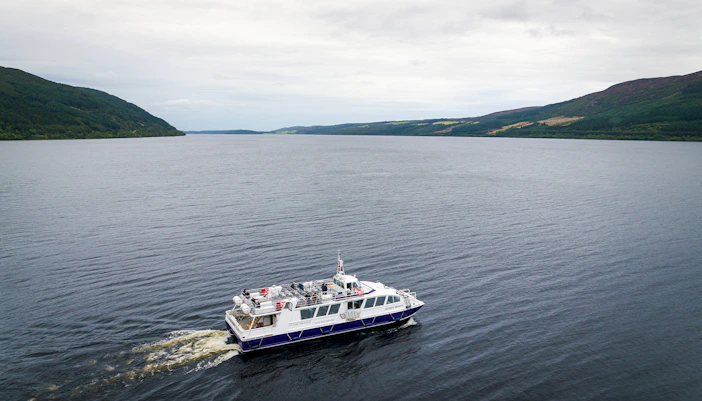
- Loch Ness tour inclusion: Access to Urquhart Castle is not a given with all standard Loch Ness tours. Many tours will simply cruise past the famous ruins or stop there (entry not included), allowing for great photo opportunities from the water.
- Accessibility: Urquhart Castle has limited accessibility for visitors with mobility issues. While the visitor centre and the main pathway to the castle are wheelchair-friendly, the historic ruins themselves, with their uneven ground, steps, and narrow passages, can be challenging to navigate. There is a "virtual tour" of the castle available at the visitor centre for those who cannot physically access the entire site.
- Opening hours: The opening and closing times for Urquhart Castle can vary by season and may be different from the schedules of the Loch Ness tours. It's crucial to check the official Urquhart Castle website for the most up-to-date hours of operation. The last admission is usually 30 mins before closing time.
History of Urquhart Castle
This spot on Loch Ness has held strategic value long before the stone ruins seen today. Fortification here may date back to the Iron Age, and a Pictish brooch fragment from the late 700s or early 800s hints at a high-status settlement on the site.
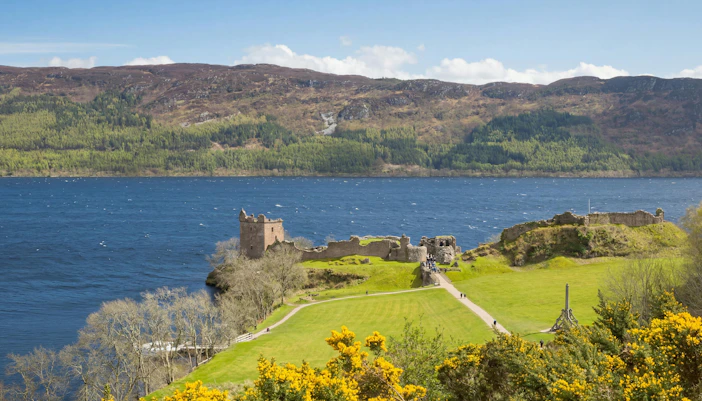
Founding the stone castle
The castle visitors see today took shape in the 13th century. In 1228, Alexander II put down a rebellion in Moray and granted the lordship of Urquhart to his son-in-law, Alan Durward, who is credited with building the earliest stone castle, centred on a motte. After Durward's death in 1275, the estate passed to John Comyn, who expanded it with a larger courtyard by the late 1200s.
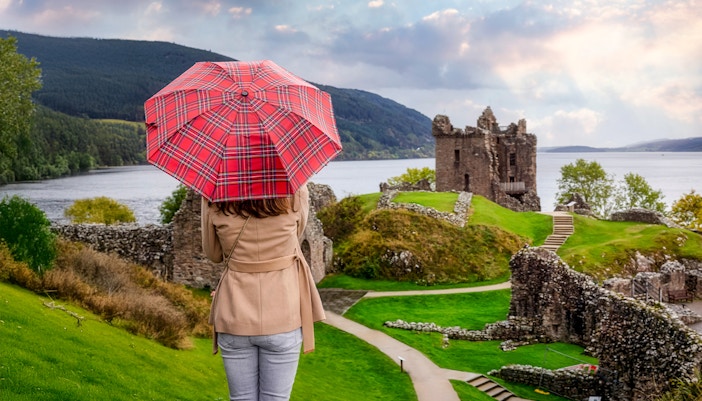
The Wars of Scottish Independence
Urquhart's position on the Great Glen made it a prize during the wars with England. Edward I captured the castle in 1296, an event tied to the war's outbreak. Control swung back and forth over the following decades until Robert the Bruce took it in 1306 after becoming King of Scots.
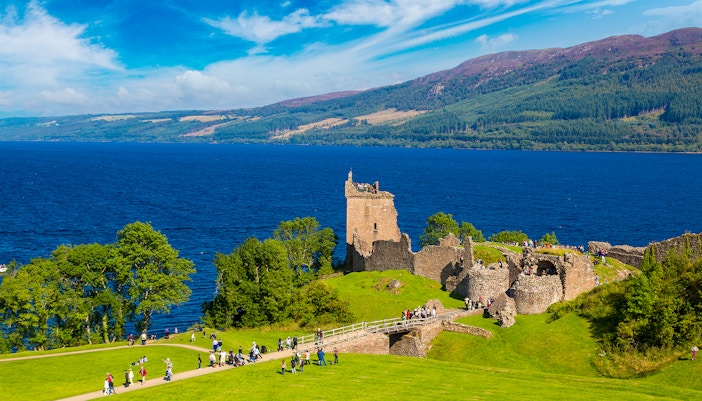
Clan conflict
From the late 1300s through the 1500s, the MacDonalds, Lords of the Isles, raided Urquhart repeatedly, capturing it outright in 1452 before losing it again in 1456. In 1509, James IV granted the barony to Clan Grant, who built the five-storey Grant Tower — but conflict continued, culminating in a devastating 1545 raid that plundered the castle of livestock, weapons, and furnishings.
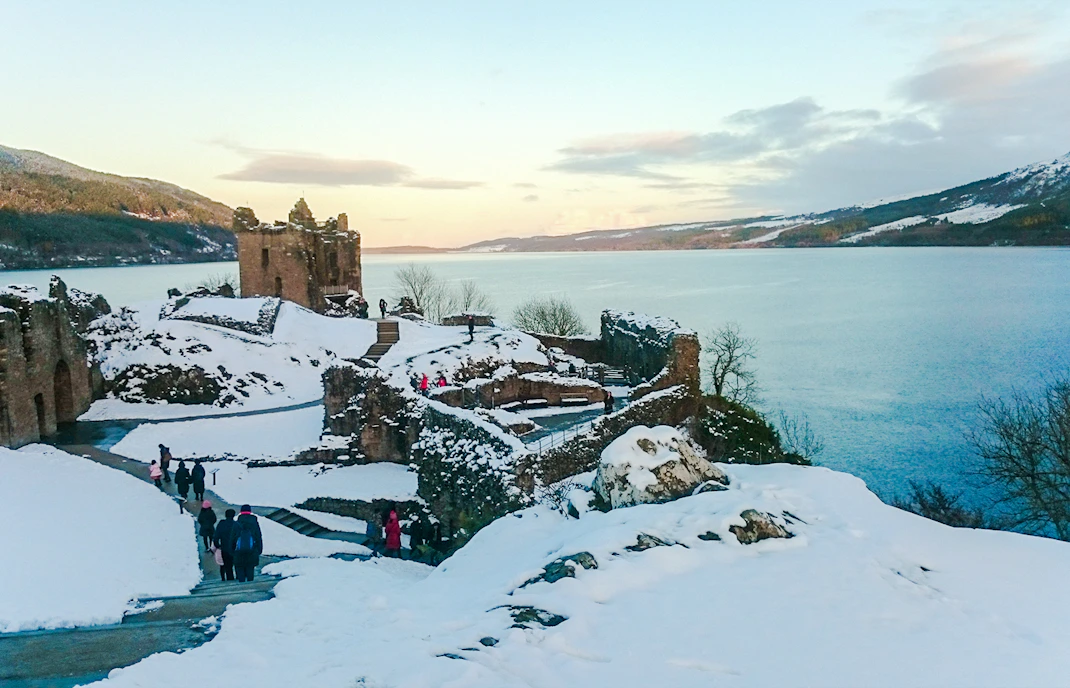
Decline and destruction
Urquhart's importance faded through the 1600s and it was largely abandoned by mid-century. Its final military role came in 1689, during the first Jacobite Rising, when a small government garrison held it against Jacobite forces. When they withdrew in 1692, they destroyed the gatehouse to keep the stronghold from ever being used again.
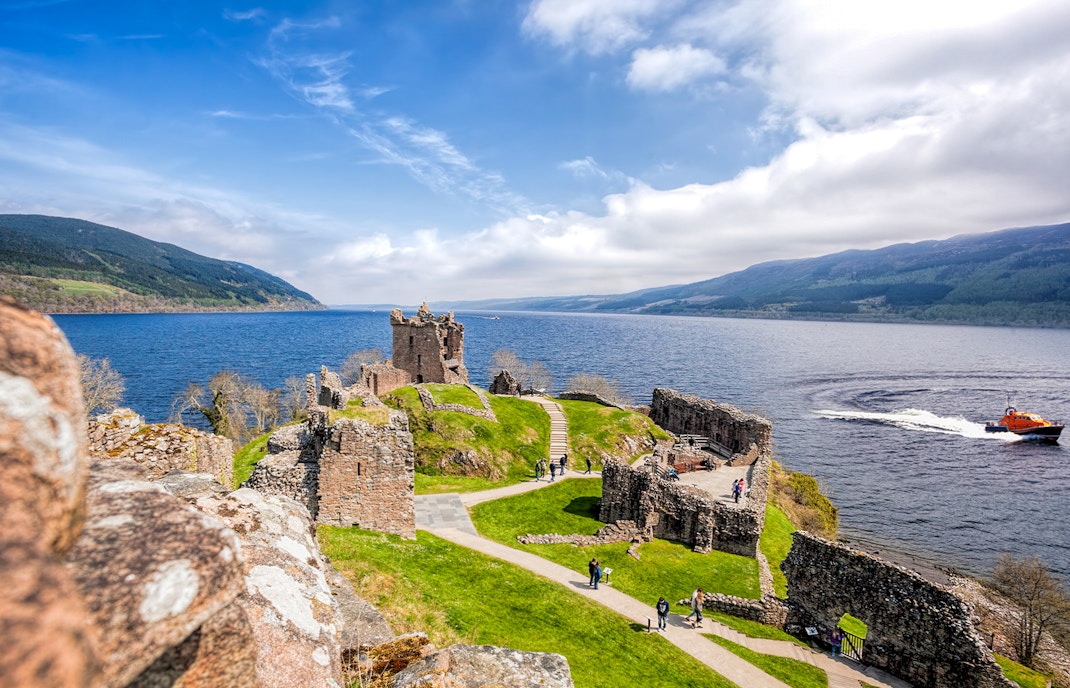
From ruin to monument
By the 1770s the roofless castle had become a romantic subject for painters and Highland travellers. On the 1911 death of Caroline, Dowager Countess of Seafield, her will placed Urquhart Castle into state care. It's now maintained by Historic Environment Scotland as a scheduled monument, and remains one of Scotland's most visited castles.
Exploring inside Urquhart Castle

The visitor centre
Before you reach the ruins, the exhibition holds the castle's most tangible link to the people who lived there: the Urquhart Ewer, a 15th-century bronze jug found on site in 1921, likely made in the Netherlands. Alongside it sits a large-scale model of the castle in its prime — worth studying before you walk out, since the ruins alone don't reveal the original layout.
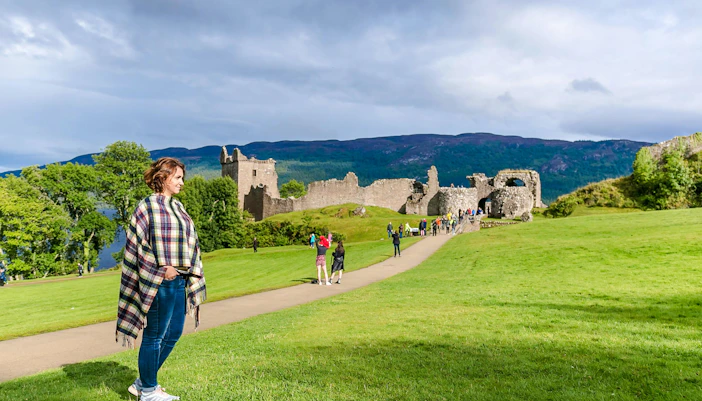
The castle grounds
A long path leads from the visitor centre across open grass toward the castle, passing the dock where Loch Ness cruises still stop. This approach is the best place to appreciate the site's shape: unlike most Scottish castles built around a central tower, Urquhart runs long and low along the shoreline, with towers at either end joined by walls.
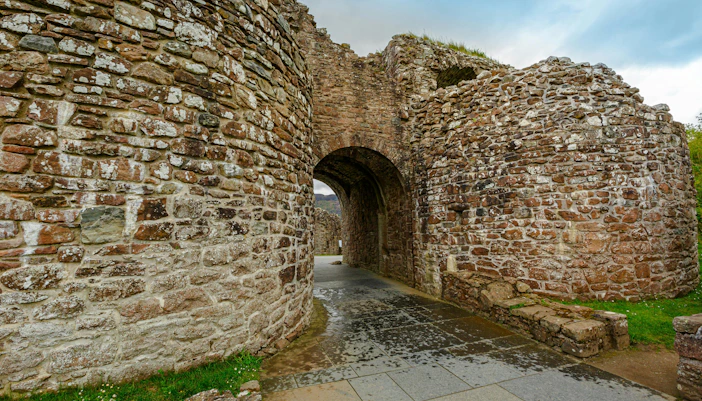
The Gatehouse
The main entry point, defended originally by a drawbridge, portcullis, and murder holes overhead for dropping stones or firing arrows on attackers below. It's also the site's most dramatic ruin: government troops blew it up in 1692 as they withdrew, and the scattered masonry beside the archway still shows the force of that explosion.
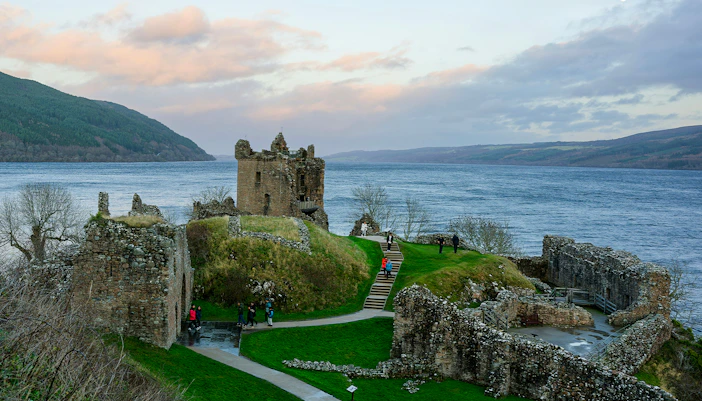
The Great Hall
The ceremonial centre of the castle, sitting beside the great chamber. Much of its furniture was stripped during the devastating 1545 MacDonald raid, so look at the bare scale of the space and picture it as a working residence. A prison cell elsewhere on site is said to have held the Gaelic bard Dòmhnall Donn.
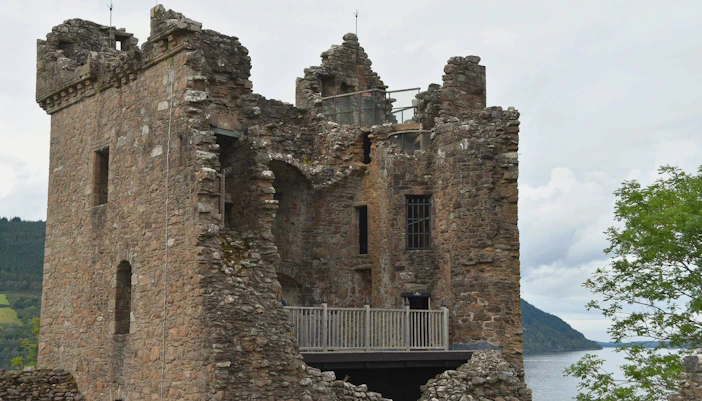
Grant Tower
The best-preserved part of the castle, built by the Grants after 1509 and rising intact from vaulted cellars to the original wallhead. The climb up the narrow spiral staircase can get congested later in the day, but from the top you see south over the ruins and north and east along Loch Ness — a view ground level never gives you.
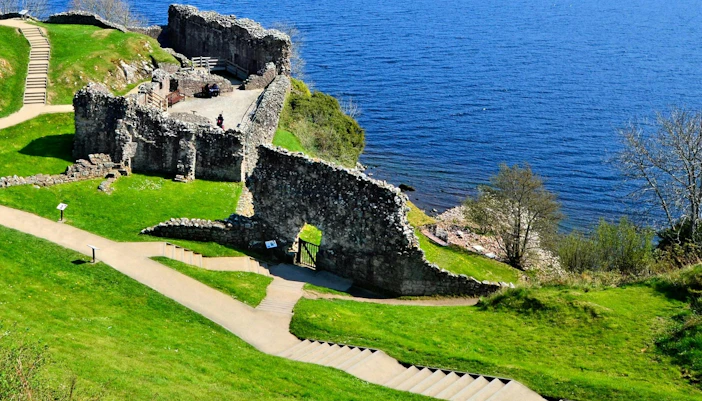
The water gate
Down at the shoreline, the water gate marks the castle's original point of arrival by boat. The angle here is lower and closer to the water than anywhere else on site, a reminder that the loch was central to how the castle was reached and supplied.
How to best experience Urquhart Castle
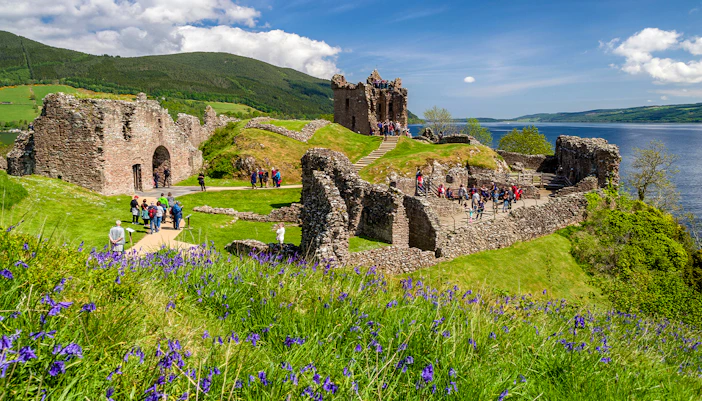
Best time to visit
Book the 9:30am slot, but linger rather than rush in — coach tour groups cluster at opening and thin out by around 10:15. If you can shift later, a 10:30 arrival often lands you a genuinely quiet castle with the same morning light off the loch.
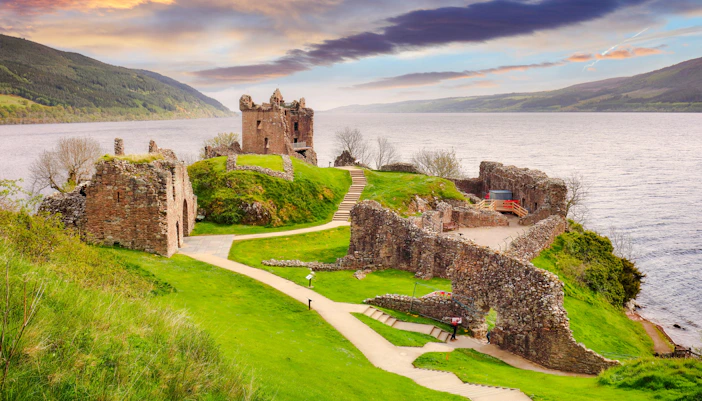
How long to spend
Budget 1–2 hours on site: the 8-minute visitor centre film first, then the ruins. Most visitors move through in under an hour and regret it — the headland, tower, and Great Hall reward slower pacing, especially if you're reading the onsite information boards.
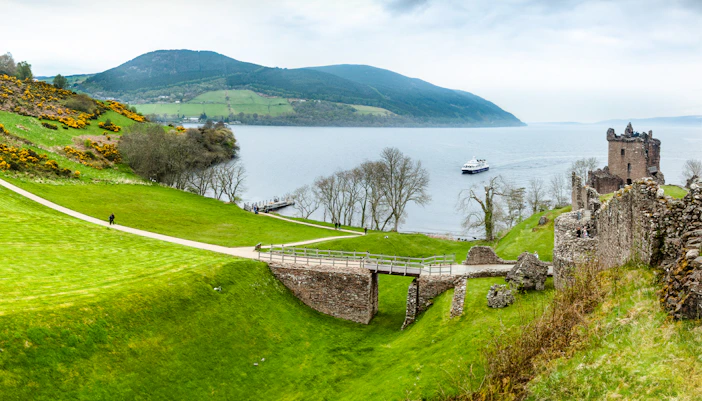
Grant Tower vs the headland
Most visitors climb Grant Tower first and treat the loch-side headland as an afterthought. Reverse it: the headland gives the classic uninterrupted Loch Ness panorama, while the tower's narrow stairs get congested later. See the view first; climb once the initial rush clears.
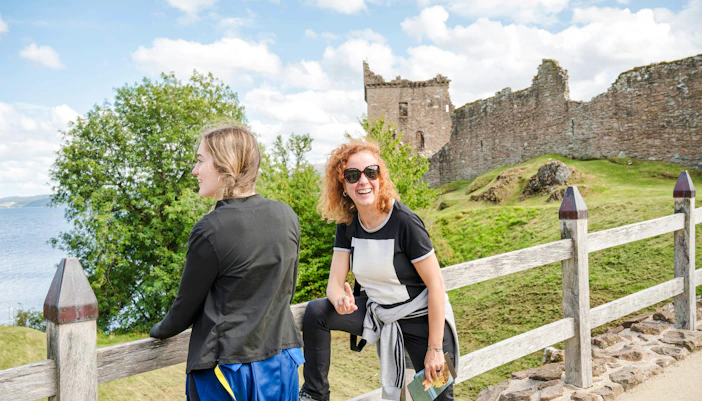
Crowd patterns
The car park itself fills before the castle does — often by mid-morning in high season. Tour coaches concentrate arrivals between 9:30 and 11 am. If you're driving, arrive before 9:30 or after 2pm, or the visitor centre becomes your bottleneck, not the ruins.
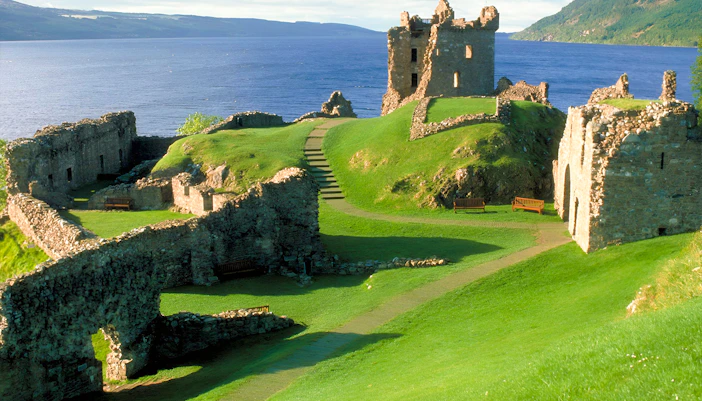
What to prioritise if time is short
Head straight for the Great Hall, the full-sized trebuchet, and the climb up Grant Tower – these three anchor the site's history and views. Skip the extended visitor centre displays if pressed for time; the film alone gives enough context to make the ruins meaningful.
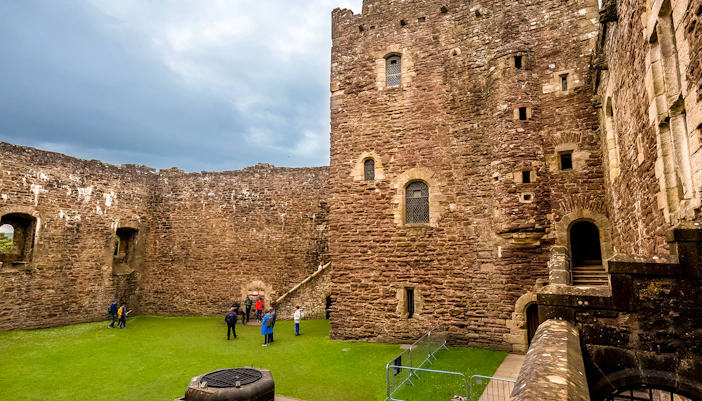
Common mistakes to avoid
Turning up without booking parking: the on-site car park is limited and books out fast in season. Also, don't assume you can linger past your entry slot — timed tickets manage flow, so plan your visit before you arrive.
Architectural highlights of Urquhart Castle
Medieval fortress on the Loch
Urquhart Castle stands as a testament to medieval military architecture, with its ruins reflecting centuries of expansion and conflict. The earliest parts of the castle, dating back to the 13th century, were built on a strategic rocky promontory. The fortress was constructed primarily with local stone, and its layout shows a progression from a simple defensive stronghold to a more complex residential tower house, a key feature of Urquhart Castle.
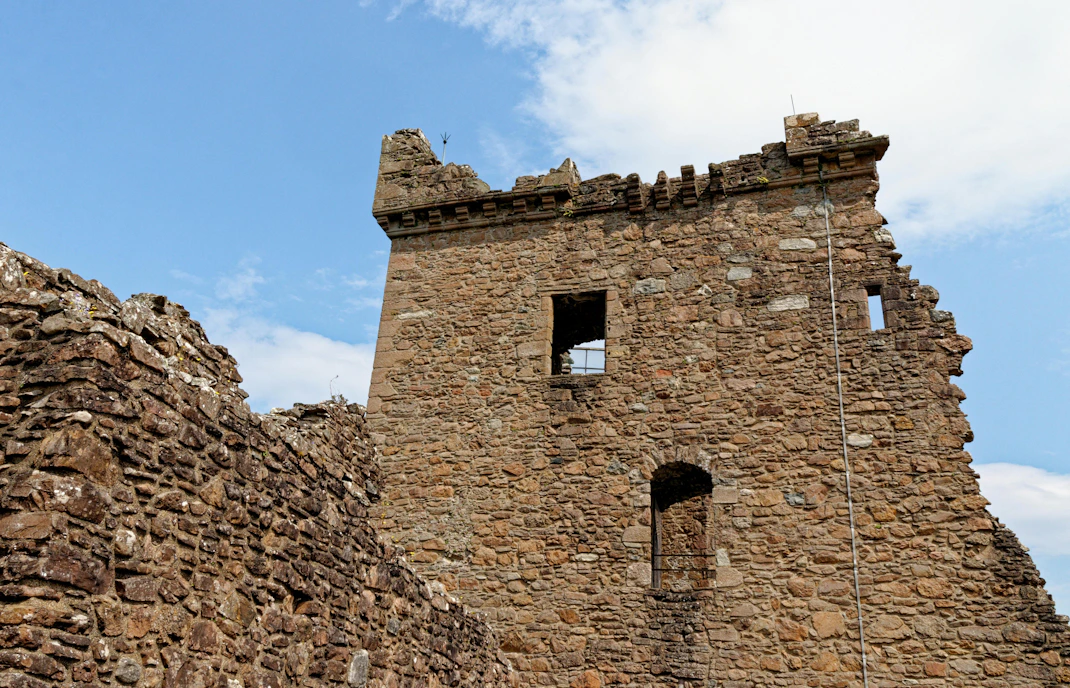
The grandeur of the Grant Tower
The most prominent feature of Urquhart Castle is the five-story Grant Tower, which was added in the 15th or 16th century. This tower house served as the main residence for the powerful Grant clan, who held the castle for many years. Its architectural style is typical of later medieval tower houses in Scotland, providing a stark visual contrast to the older, more rudimentary defensive walls. The tower's commanding position offers stunning views of the surrounding area.
Historical & cultural significance
Few people realise Urquhart's story predates the stone castle by centuries — a Pictish brooch fragment and a traditional account of St Columba's visit in 580 AD point to activity here long before Alexander II's 1228 grant. Later held as a royal castle, it was deliberately destroyed in 1692 to keep it from Jacobite forces. Today it's a scheduled monument under Historic Environment Scotland, drawing 466,420 people through its gates in 2025 alone — and occasionally hosting weddings.
Notable figures of Urquhart Castle
Alexander II
Commissioned the medieval royal castle during the 13th century to strengthen royal authority in the Highlands.
Edward I
Captured Urquhart Castle in 1296 during his invasion of Scotland, beginning decades of conflict over the fortress.
Robert the Bruce
Brought Urquhart Castle under Scottish control after becoming King of Scots, making it a key royal stronghold.
John Grant of Freuchie
Restored and rebuilt the castle after receiving it from James IV, with the Grant family constructing the iconic Grant Tower.
Know before you go to Urquhart Castle
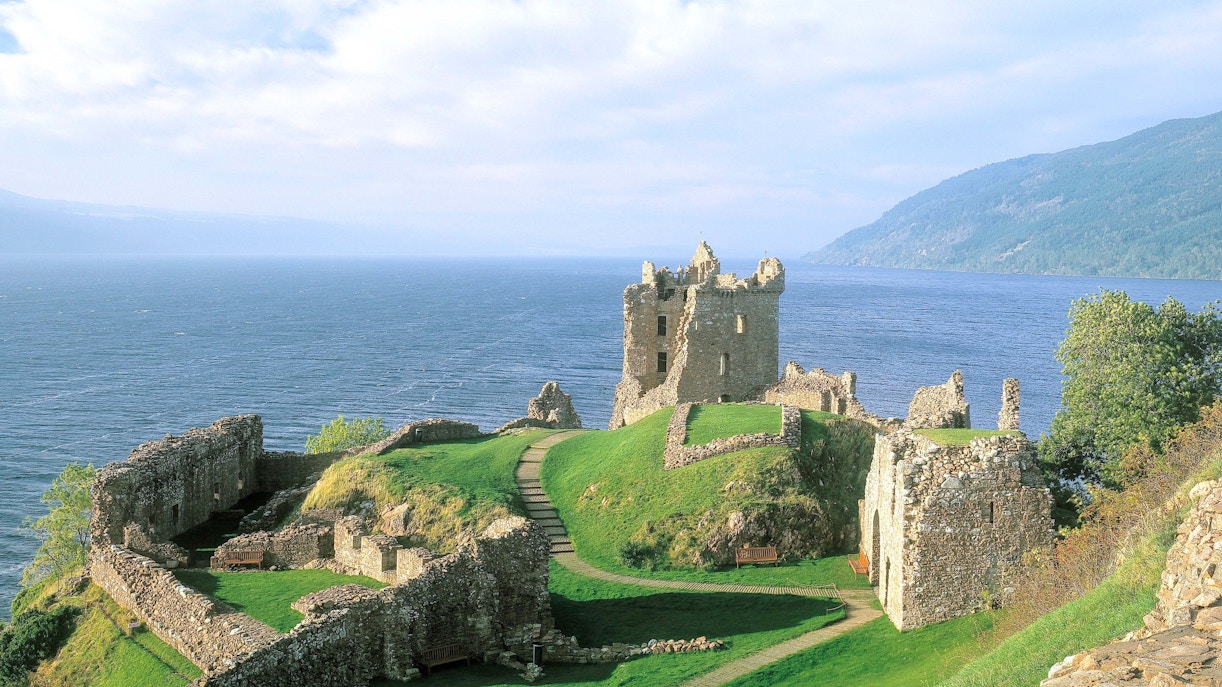
- 1 April–31 August: 9:30am to last entry 7:15pm, closing at 8:15pm.
- 1–30 September: 9:30am to last entry 5pm, closing at 6pm.
- 1–31 October: 9:30am to last entry 4pm, closing at 5pm.
- 1 November–31 March: 9:30am to last entry 3:30pm, closing at 4:30pm.
- Closed 25 and 26 December. Last entry on 24 December is 2:30pm.
- Entry is by timed slot. Capacity is limited and entry outside your booked slot is not guaranteed.
Note: Adverse weather or other reasons beyond control may cause the castle to close. We advise checking ahead if the forecast is poor or if you are making a long journey. Opening times are also subject to change.
Address: Drumnadrochit, Inverness IV63 6XJ, United Kingdom | Find on maps
- By car: On-site car park, free but must be pre-booked online alongside your entry ticket.
- By bus: Services 918/919 stop at Strone, Urquhart Castle, close to the entrance.
- Nearest rail station: Inverness.
- Access to the castle is via the visitor centre only. There is no separate entrance.
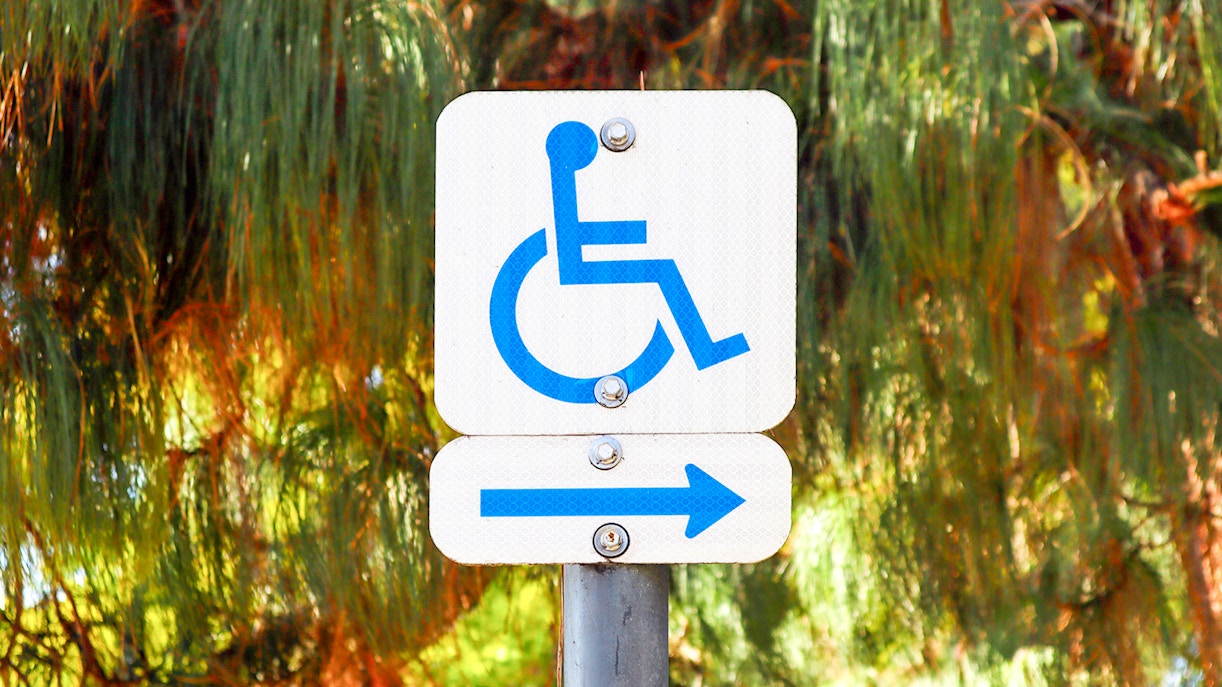
- The car park has a level, tarmac surface with accessible bays.
- The route from the visitor centre to the castle is a steep tarmac ramp/path, with a bridge into the keep.
- Paths within the castle grounds are tarmac or bound gravel.
- Grant Tower is accessed via a narrow wooden staircase.
- The Water Gate sits at the bottom of a sloped path and a steep set of steps.
- Two mobility scooters and two wheelchairs are available on site, first come first served, with no advance booking.
- Only assistance dogs are permitted, including within roofed areas.
- An adapted toilet is available in the visitor centre.
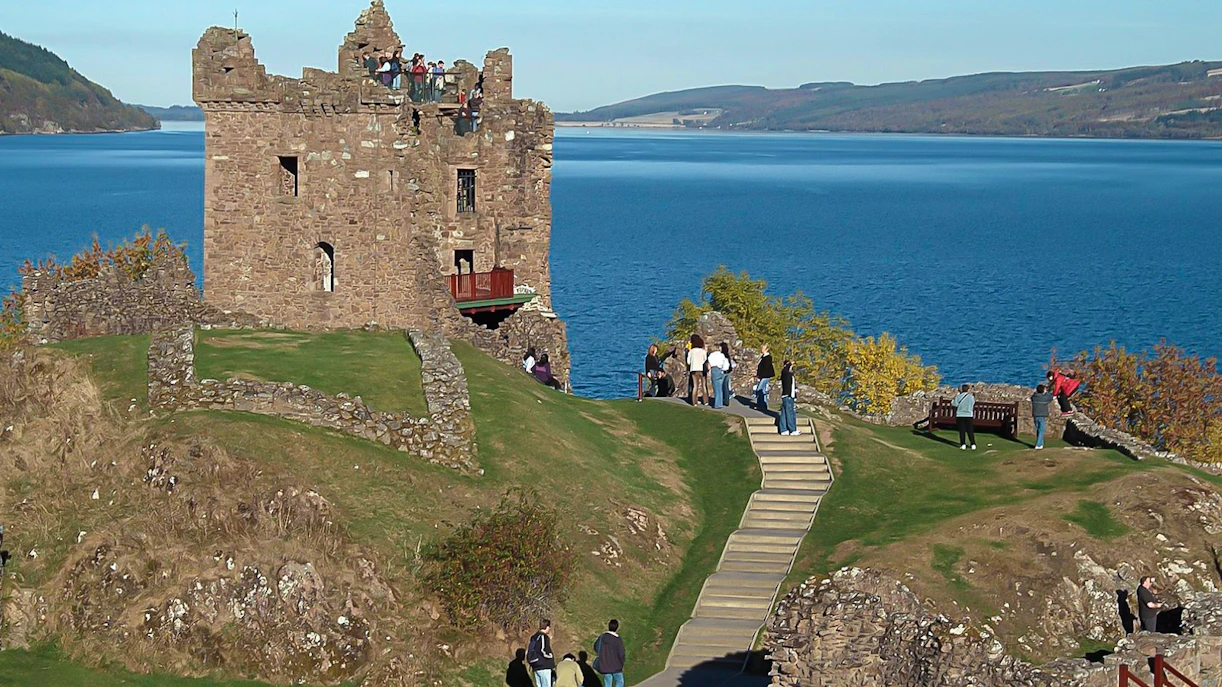
- Grant Tower is accessed via a narrow wooden staircase.
- The approach to the castle involves a steep tarmac ramp/path from the visitor centre.
- Ruins have uneven ground, gravel paths, and stone steps in places.
- The Water Gate requires descending a steep flight of steps.

- No dogs are permitted except assistance dogs.
- Entry tickets, and parking if required, must be booked online in advance.
- Personal photography and filming are permitted. Commercial filming or drone use requires prior permission from Historic Environment Scotland.

- Buy tickets a few weeks in advance in peak season — Urquhart Castle slots can sell out, especially in summer.
- The 9:30am opening slot draws the most tour coaches; many groups start leaving by around 10:15am, so a slightly later arrival can mean a quieter visit at the same price.
- The on-site car park fills quickly in high season — sometimes by mid-morning. If it's full, you'll need to park in Drumnadrochit and walk in or take the bus instead.
- Bring a windproof or waterproof layer even in summer. The site sits exposed on the water, and wind funnelling down the Great Glen can be cold regardless of season.
- If mobility is a concern, ask at the visitor centre about the virtual tour, which covers areas of the castle that aren't step-free.
- Public buses (service 918/919) stop right by the visitor centre and can be cheaper than a guided coach tour if you're travelling from Inverness.
- Drone use requires pre-booking through the relevant UK drone safety platform, in addition to permission from Historic Environment Scotland — sort this out before you arrive, not on site.
Frequently asked questions about Urquhart Castle
Yes, it is highly recommended to book your tickets online in advance to guarantee your entry, especially during peak season.
Plan to spend around 1.5 to 2 hours exploring the ruins, the Grant Tower, and the modern visitor centre at Urquhart Castle.
Urquhart Castle has a visitor centre with a shop, a cafe, and accessible toilet facilities. Mobility scooters and wheelchairs are also available to borrow.
Not entirely. While the visitor centre, parking areas, and Lochview Café are fully accessible, access within the historic castle ruins is limited due to steep gradients, terraced paths, steps, and uneven stone surfaces.
There is no specific dress code, but you should dress for the Scottish Highlands climate. Be prepared for wind and rain, and wear comfortable, sturdy footwear for the uneven terrain at Urquhart Castle.
Yes, personal photography and filming are permitted at Urquhart Castle. For commercial filming or drone use, you must obtain prior permission from Historic Environment Scotland.
Yes, parking at the castle must be pre-booked online along with your admission ticket to guarantee a space.
No, the standard admission ticket provides access for a self-guided tour. Audio guides are available for hire to enhance your visit.
Generally, tickets are non-refundable. It's best to check the specific booking terms on the Historic Environment Scotland website.
Yes, children enjoy exploring the ruins, climbing the tower, and imagining life in a medieval castle. The trebuchet replica is a particular highlight.
Only assistance dogs are permitted inside the visitor centre and the castle grounds.